How Do They Compare?
We don’t have to worry about offending manufacturers with what we say for fear of not getting a new car to test at the next release. So you can get an honest feel of what its like to live with both a 200 and big Silverado. So I’ll go through the key points we noticed during the 2 years of owning the 200 and now 1500k’s of towing and normal driving with the Silverado.
The first thing I need to say is that the 200 will be missed. The build and ride quality was probably the best of any car I’ve owned. So I wont be looking for reasons to prefer a new Silverado. I’ll go through a prioritised list as you would discussing their points over a camp fire or a beer at the caravan park fivesy’s.
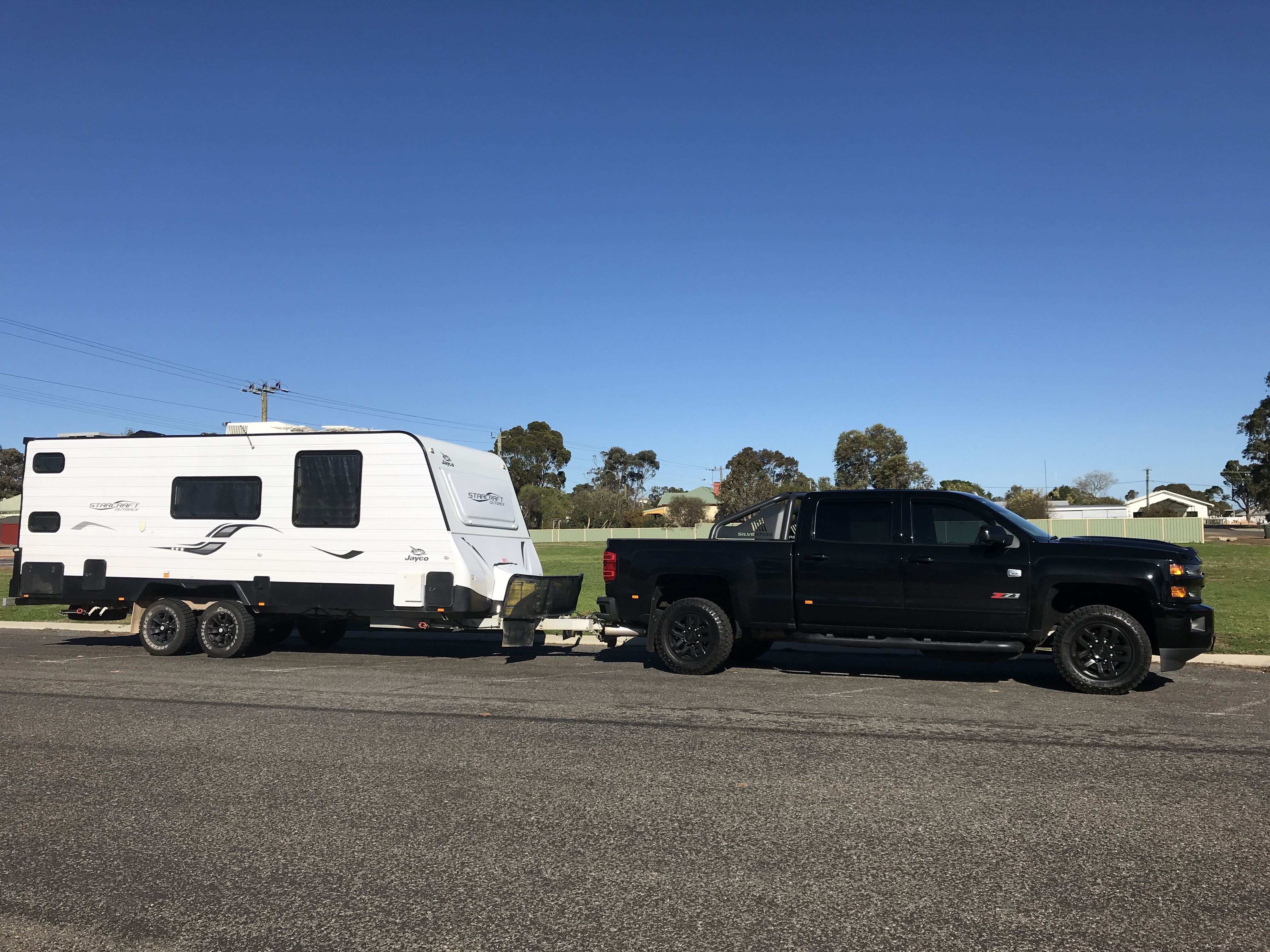
Fuel. Ironically, the towing figures are exactly the same. Towing the same Jayco Starcraft Outback 22ft caravan both vehicles recorded 21.7L per 100k’s over a 1000k distance. Admittedly the 200 was tuned (both ECU and TCM) which when done properly returns better fuel economy. (We will advise tuned towing figures for the Silverado when they come to hand).
The 200 however gets to use more of the fuel in the tank before the fuel light comes on which gives better range. Without towing the 200 gets better fuel economy than the un-tuned Silverado. The Silverado basically doesn’t care if its towing or not when it comes to fuel.
Power. Given we love power we have to talk about it. Towing, its not surprising the Silverado has a massive edge here. Even stock it’s hard to not speed, going up the North Dandalup – Dwellingup road we needed to use cruise control so we didn’t go over the speed limit. And there are some steep gradients on that section of road. It just selects 6th (in tow mode) and sits on 1500rpm rarely going back to 5th to maintain 90km/hr. The 200 is basically flat-out maintaining a speed close to 90. Its the same story overtaking, the 200 can leave you a little nervous at times trying to get around a slower vehicle (especially when it starts weaving – but we’ll get to that more later) whilst the Silverado barely breaks a sweat going from 90 to 105km/hr in an instant and it doesn’t care when the speed gets up – it just stays arrow straight. Not towing is a bit different, the 200 just seems to rev more easily and the trans is much better at shifting around. Constant 4WD in the 200 makes it easy to take off in greasy conditions too as the Silverado wants to spin, even in the dry.
Handling and Noise. The Silverado is much more confidence inspiring when towing. Most of the time its just two fingers on the wheel, and it never starts weaving even when the speed gets up there, and that 100% stock. The 200 however needs a set of airbags at least to inspire any confidence. And even with airbags and tow ball weights all set up correctly it can get seriously out of shape in windy conditions or overtaking (and our van has ESC). The 200 is much quieter in every respect including engine, transmission, tyre and wind noise. Even after four gruelling Ningaloo Road passes the 200 doesn’t have any creaks or rattles – I think the Silverado has a few already. And while we’re on the noise subject, why does Chevrolet need to torture its occupants with incessant chimes and gongs? Maybe we will be able to suss out a hack to calm this down in time, but enough already.
Lights. The Silverado has terrible head lights, I’m surprised it even complies with ADRs. We have a big LED light strip behind the grille to make it safe to drive on country roads at night but switching to low beam is like turning all the lights off, you can’t see anything, and high beam is just a tad too strong to point at oncoming vehicles – its lighting sucks. This is indicative of US domestic market vehicles we think as every time we we go to SEMA and hire a car we always notice how bad the lights are. The 200’s lights are superb on the other hand, it doesn’t need driving lights at all.
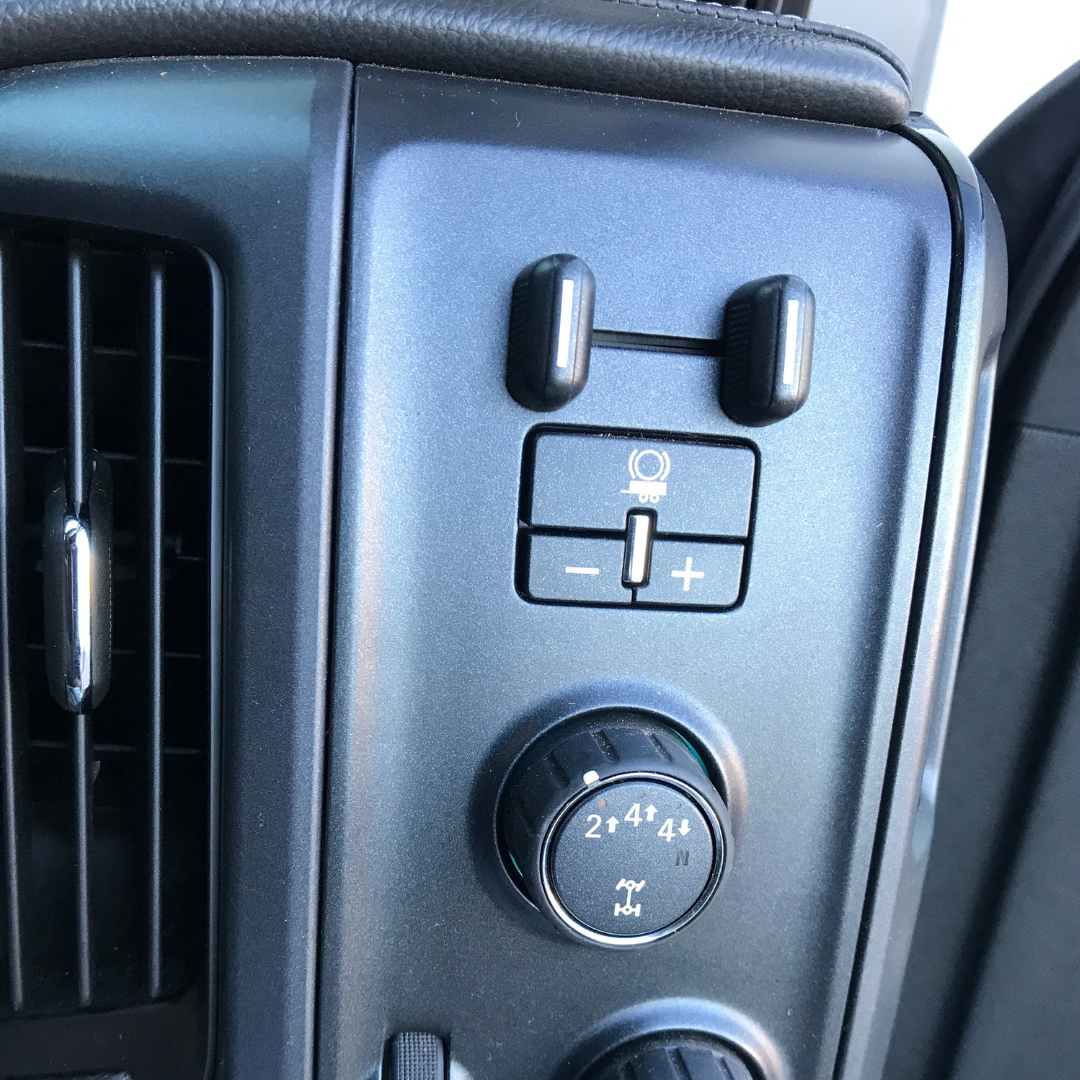
Brakes. The 200 has better brakes, both feel and power. But the Silverado has a factory fitted electronic brake controller which is better than an after-maket one we think. The gain is easier to work out and stays set unlike the dial of a Redarc which invariably gets knocked and moves between van hook-ups making it necessary to readjust it all the time. When not towing there’s not too much in it.
Parking Around Town. The most commonly asked question we get is “how do you park that thing anywhere?” Yes, the 200 is easier to deal with around town. But with a little trip planning its no big deal taking the Silverado to the shops, you just need to park a little further from the front door to find a suitable spot where you wont get door dings from inconsiderate people in the parking lot – and to be honest I did this with the 200 anyway as I hate getting damage from car parks.
Tid Bits. Column shift is not as good as a console mounted shifter – I don’t know why they still make them with a column shift. Left hand indicators on the Silverado are annoying particularly when going from “normal” right hand side indicator stalk and back all the time. If you buy a black Silverado, get used to random people saluting, waving and flexing when they see you – my wife hates it and my daughter loves it, I’m undecided.